Municipal operations
Works planned against assets, not against memory
Roads, green spaces, street furniture, lighting and public buildings maintained on a plan the administration can defend.
Why it matters
The annual plan and what was done, on one record
Maintenance is where budgets quietly disappear. The platform ties each work order to the asset it serves, the budget line it draws on and the crew or contractor that performed it, so the annual plan and what was actually done are the same record.
Tied to the asset it serves
Each work order names what it was performed on.
Tied to the budget line
Spending is visible against the plan while the year is still running.
Tied to who performed it
Crew or contractor, on the same record.
What it covers
The plan, the work orders and what they cost
Planned and reactive work compete for the same crews and the same budget.
Annual maintenance plan
Planned interventions per asset class, per season and per budget line.
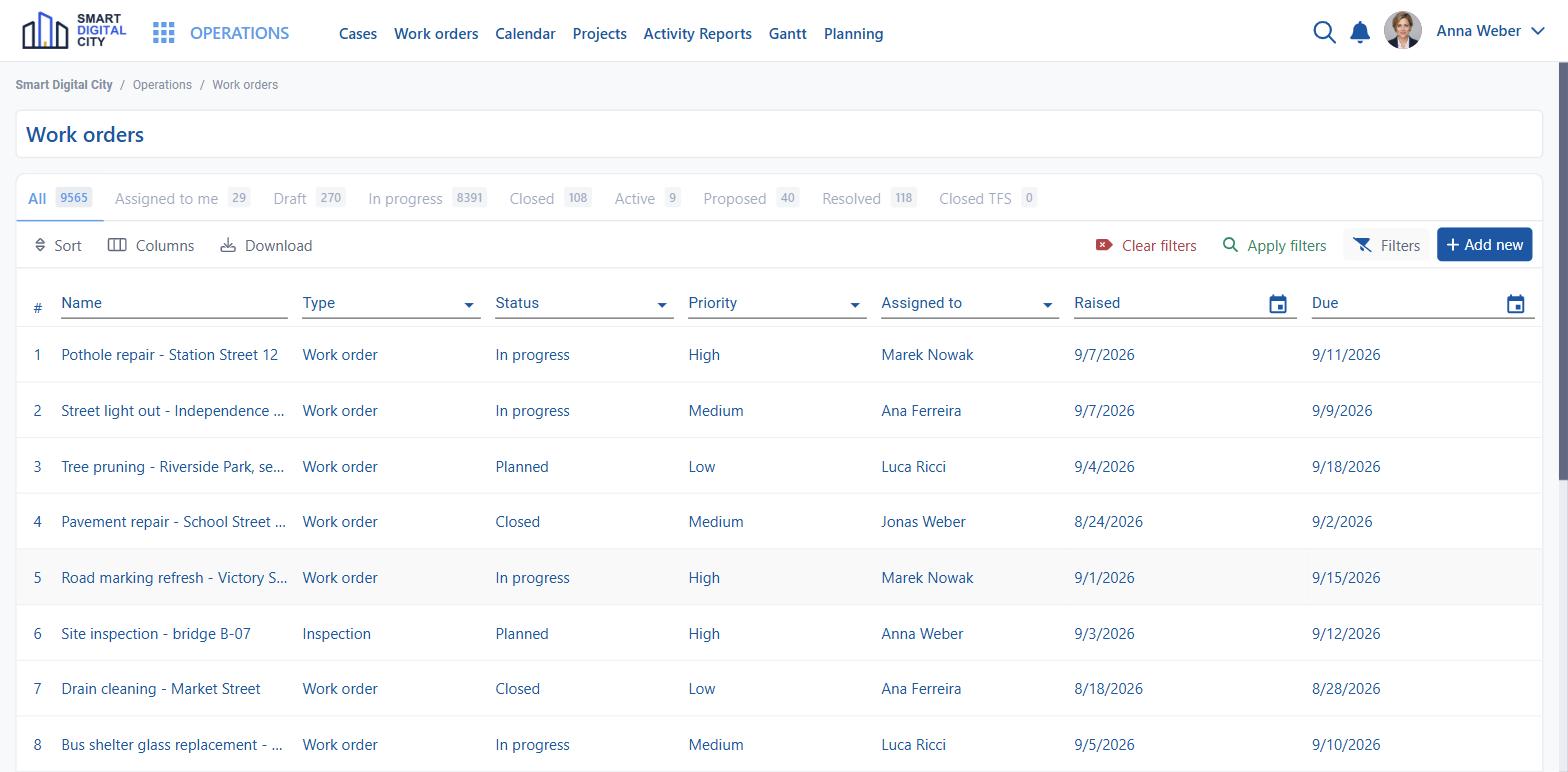
Work orders
The unit of work: location, scope, materials, crew, cost and evidence.
Reactive works
Reports from residents and inspection findings turned into scheduled jobs.
Green spaces
Mowing, planting, tree inventory and seasonal cycles as recurring work.
Materials and machinery
What was consumed and which equipment was used, per job.
Cost and completion
Actual cost against estimate, and evidence that the work was done.
How it works
From the register to the closed job
The plan and the record of what was done are the same data.
01
Plan from the asset register
The plan is built from what the administration owns and its condition, rather than from last year's spreadsheet.
02
Raise work orders
Planned and reactive work enter the same schedule and compete for the same crews and budget.
03
Execute and evidence
Crews record start, finish, materials and photographs from the field; contractors report against their contract.
04
Close against the asset
Cost and history land on the asset, feeding the next plan and the next budget.
Outcomes
What changes
Priorities from condition data, and a cost per asset the administration can quote.
A plan built on condition
Priorities come from asset data, not from who called last.
Cost per asset, per year
The administration can say what a road or a park actually costs it.
Reactive work under control
Emergencies are visible against the plan they displace.
Configured per administration
What is configured
- Asset classes and the maintenance cycles for each
- Work order types, scopes and standard costs
- Crews, skills, equipment and areas
- Budget lines and approval limits per work type
- Which works go to contractors, and under which contract
- Evidence required to close a job
- Seasonal calendars and recurring work
- Reporting per asset, per area and per budget line
Connected to
The rest of the platform
- Public asset management and the asset register
- GIS, for location, area and coverage
- Field service, for the crews doing the work
- Budget and procurement, for cost and contracts
On your asset base
Bring one asset class and last year's maintenance spend.
We rebuild the plan from condition and show what the same budget would have bought.