The platform
The digital operating system for local government
Smart Digital City connects structured data, public services, internal workflows and urban operations through one configurable architecture.
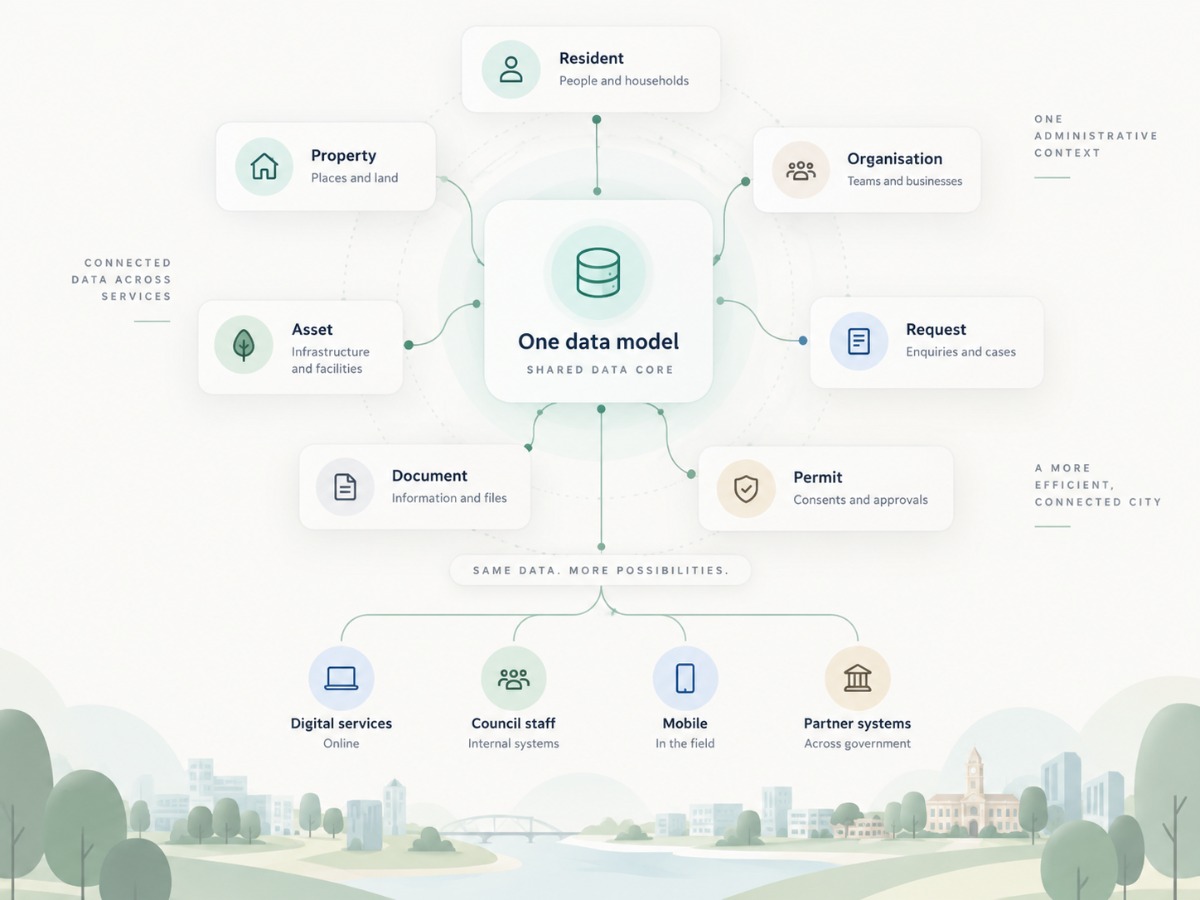
Entity-centric architecture
Data lives beyond the form that created it
The data model defines entities, relationships, permissions and lifecycle rules. A resident, company, property or asset remains part of the administrative context across services, channels and workflows.
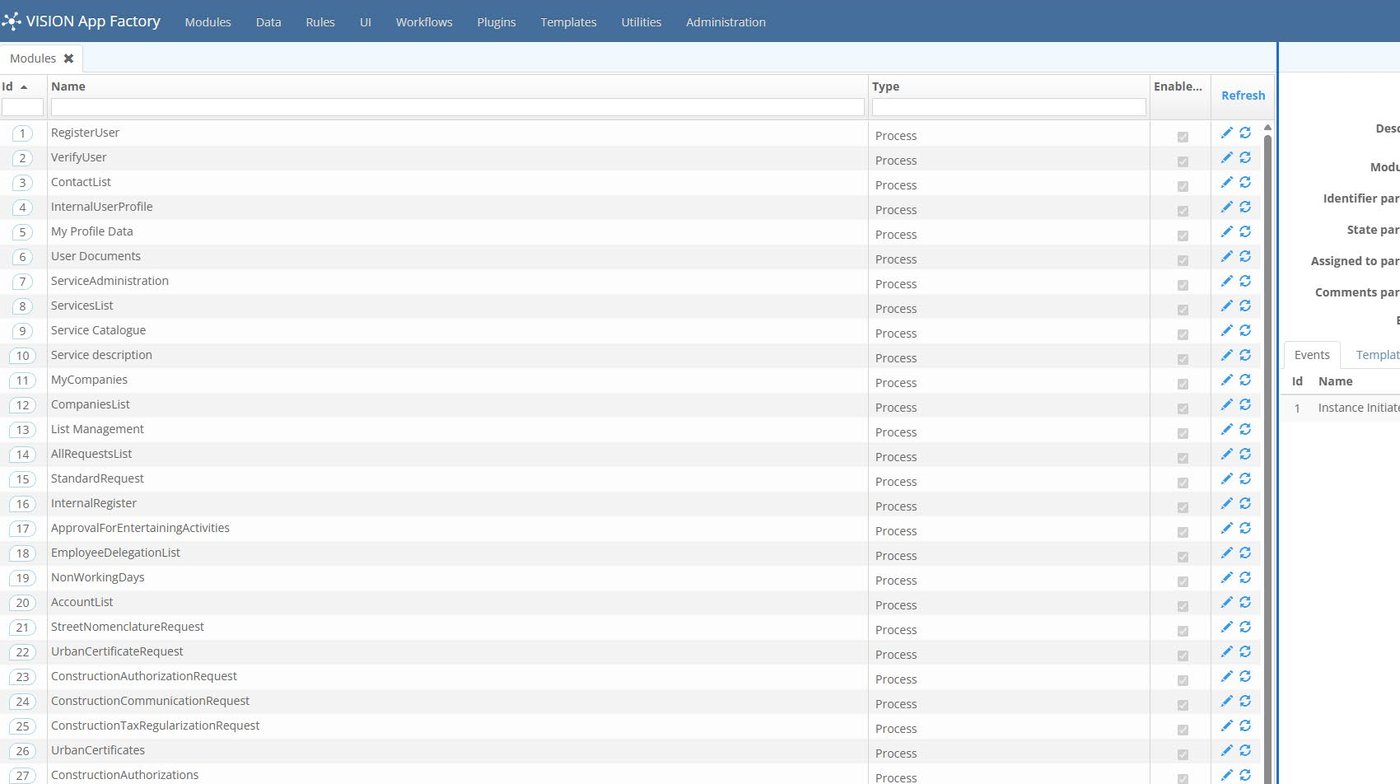
Architecture
Five connected layers
Every layer can meet an existing system, while the administrative context stays in one place.
Visual application design
Configure data models, responsive interfaces, workflows and business rules in connected visual editors.
Omnichannel by default
Internal portal, external portal, mobile, kiosk, email and APIs use the same operational core.
Integration without islands
Connect existing ERP, DMS, GIS, identity services, registers and sector applications.
Documents in context
Generation, metadata, versions, OCR, signing and full-text retrieval stay connected to the case.
Geospatial operations
Map layers, objects, alerts, geofencing and field activity support operational workflows.
Governed intelligence
AI-assisted steps can be placed inside workflows with human review and traceable acceptance.
Urban systems
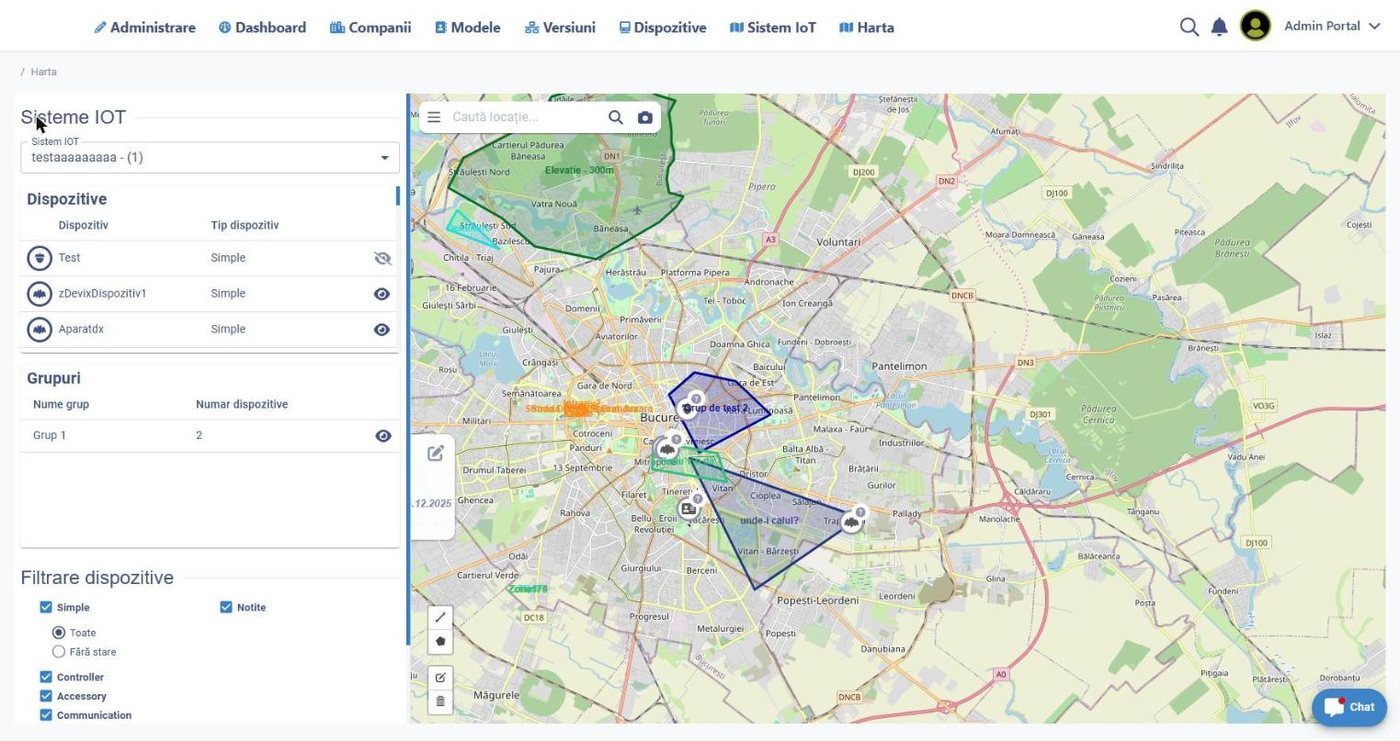
The city's physical layer runs on the same core
Street lighting, environmental sensors, metering and field devices report into the same platform that handles cases and assets, so an alert can open a work order without leaving the administrative context.
Architecture review
Bring your current systems to the conversation.
We map what stays, what connects and what the platform replaces — before any commitment.